
Water guide
Make water safe to drink
When tap water might not be safe, use bottled water if you have it. If you don't, boiling is the best way to make water safe to drink, according to the CDC.
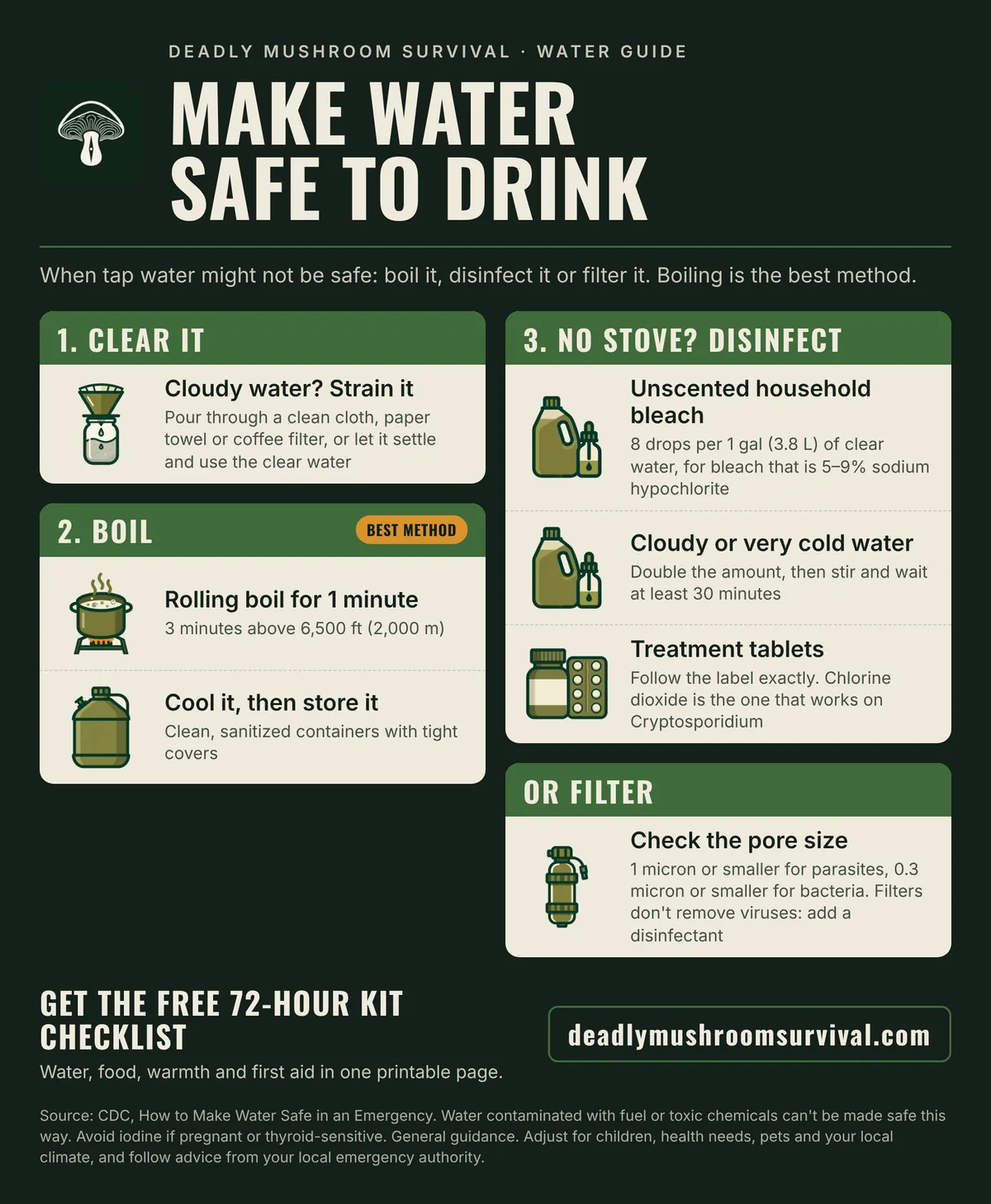
Key points (text version)
Step 1: Clear it
- If the water is cloudy, filter it through a clean cloth, paper towel or coffee filter, or let it settle and pour off the clear water before treating it.
Step 2: Boil (the best method)
- Bring clear water to a rolling boil for 1 minute. Above 6,500 feet (2,000 m), boil for 3 minutes.
- Let it cool, then store it in clean, sanitized containers with tight covers.
Step 3: No stove? Disinfect
- Use unscented household bleach that is 5% to 9% sodium hypochlorite: 8 drops per 1 gallon (3.8 L) of clear water, or 2 drops per quart or liter. The CDC lists different amounts for 1% bleach, so check your label.
- If the water is cloudy, murky, colored or very cold, double the amount of bleach.
- Stir well and let the water stand for at least 30 minutes before drinking.
- Treatment tablets and drops: follow the product label exactly. Chlorine dioxide tablets kill Cryptosporidium if used correctly; iodine tablets and chlorine tablets will not. Boiling works better than disinfectants against Cryptosporidium and Giardia.
- Iodine: people who are pregnant, have thyroid problems or are hypersensitive to iodine should avoid iodine-disinfected water.
Or filter it
- For parasites such as Giardia and Cryptosporidium, the filter pore size must be 1 micron or smaller. For bacteria it must be 0.3 micron or smaller.
- Portable filters do not remove viruses. After filtering, add a chemical disinfectant.
When water can't be made safe
- Water contaminated with fuel, toxic chemicals or radioactive materials can't be made safe by boiling or disinfecting. Use bottled water or another source, and contact your health department for advice.
Water is one part of a full kit. See the 72-hour bag guide for how much to store.
Sources
General information only. Adjust for your health, family, pets and local conditions, and follow advice from your local emergency authority.
More guides
- The 72-hour survival bagWhat to pack: water, food, light, first aid and documents.
- Power out? Do thisWhat to have ready, what to do and when to throw food away.
- Build a first aid kitThe Red Cross list for a family of four, with quantities.
- Car emergency kitWhat Ready.gov suggests keeping in your vehicle.