
First aid guide
Build a first aid kit
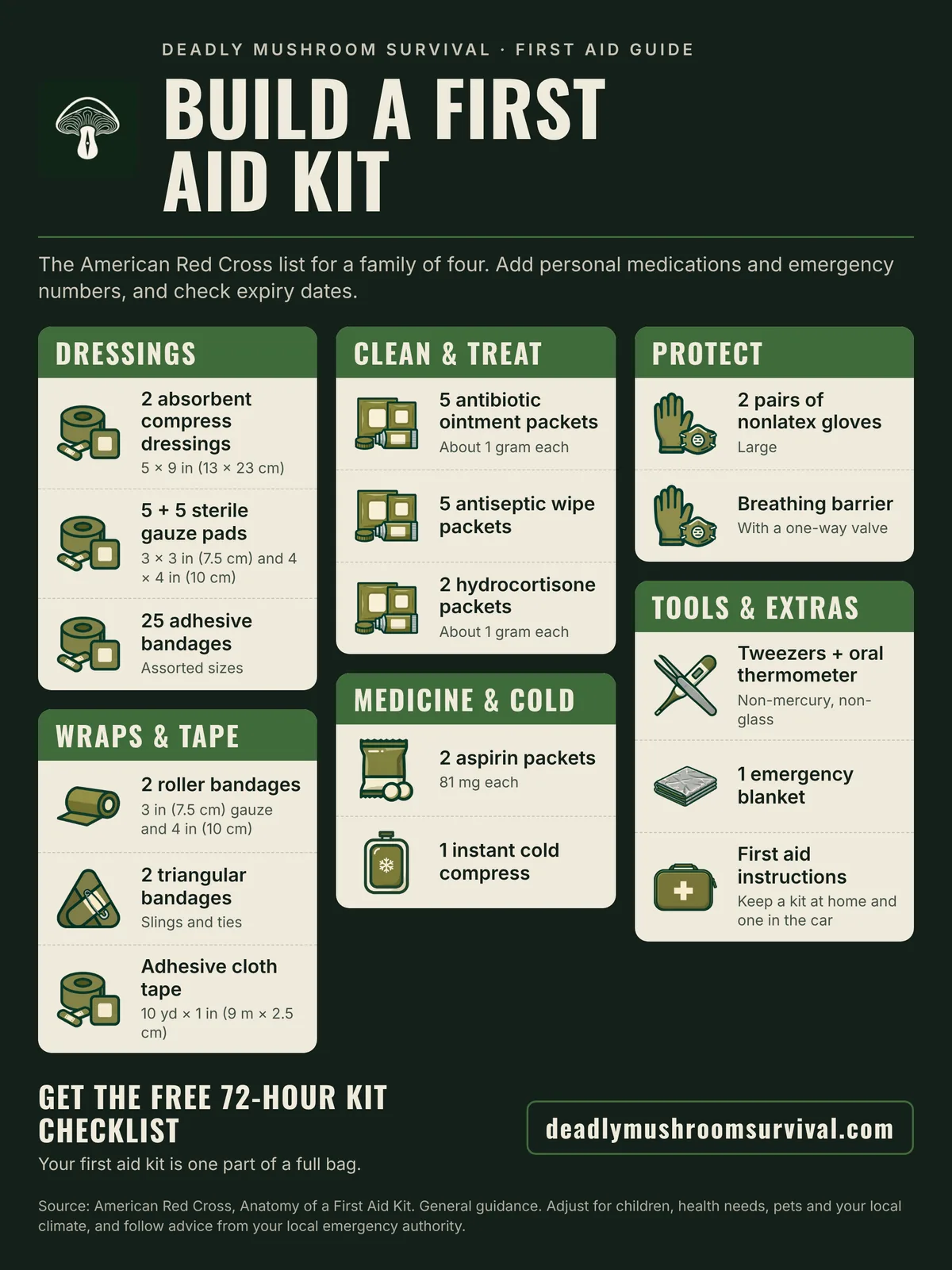
The American Red Cross list for a family of four. Add personal medications and emergency phone numbers, and check expiry dates.
Key points (text version)
What goes in the kit
Dressings
- 2 absorbent compress dressings, 5 × 9 in (13 × 23 cm)
- 5 sterile gauze pads, 3 × 3 in (7.5 × 7.5 cm)
- 5 sterile gauze pads, 4 × 4 in (10 × 10 cm)
- 25 adhesive bandages, assorted sizes
Wraps and tape
- 1 roller bandage, 3 in (7.5 cm) gauze roll
- 1 roller bandage, 4 in (10 cm) wide
- 2 triangular bandages
- 1 adhesive cloth tape, 10 yd × 1 in (9 m × 2.5 cm)
Clean and treat
- 5 antibiotic ointment packets (about 1 gram each)
- 5 antiseptic wipe packets
- 2 hydrocortisone ointment packets (about 1 gram each)
Medicine and cold
- 2 packets of aspirin, 81 mg each
- 1 instant cold compress
Protection
- 2 pairs of nonlatex gloves, size large
- 1 breathing barrier with a one-way valve
Tools and extras
- Tweezers
- Oral thermometer (non-mercury, non-glass)
- 1 emergency blanket
- Emergency first aid instructions
Make it yours
- Add personal items such as medications, emergency phone numbers and anything your health-care provider recommends.
- Inspect the kit regularly, check expiration dates, and replace anything used or expired.
- Keep a first aid kit at home and one in your car. See the car emergency kit guide.
Sources
General information only. Adjust for your health, family, pets and local conditions, and follow advice from your local emergency authority.
More guides
- The 72-hour survival bagWhat to pack: water, food, light, first aid and documents.
- Power out? Do thisWhat to have ready, what to do and when to throw food away.
- Make water safe to drinkBoil, disinfect or filter: the CDC steps for emergency water.
- Car emergency kitWhat Ready.gov suggests keeping in your vehicle.