
Blackout guide
Power out? Do this
What to have ready, what to do during an outage and when to throw food away, based on American Red Cross power outage safety guidance.
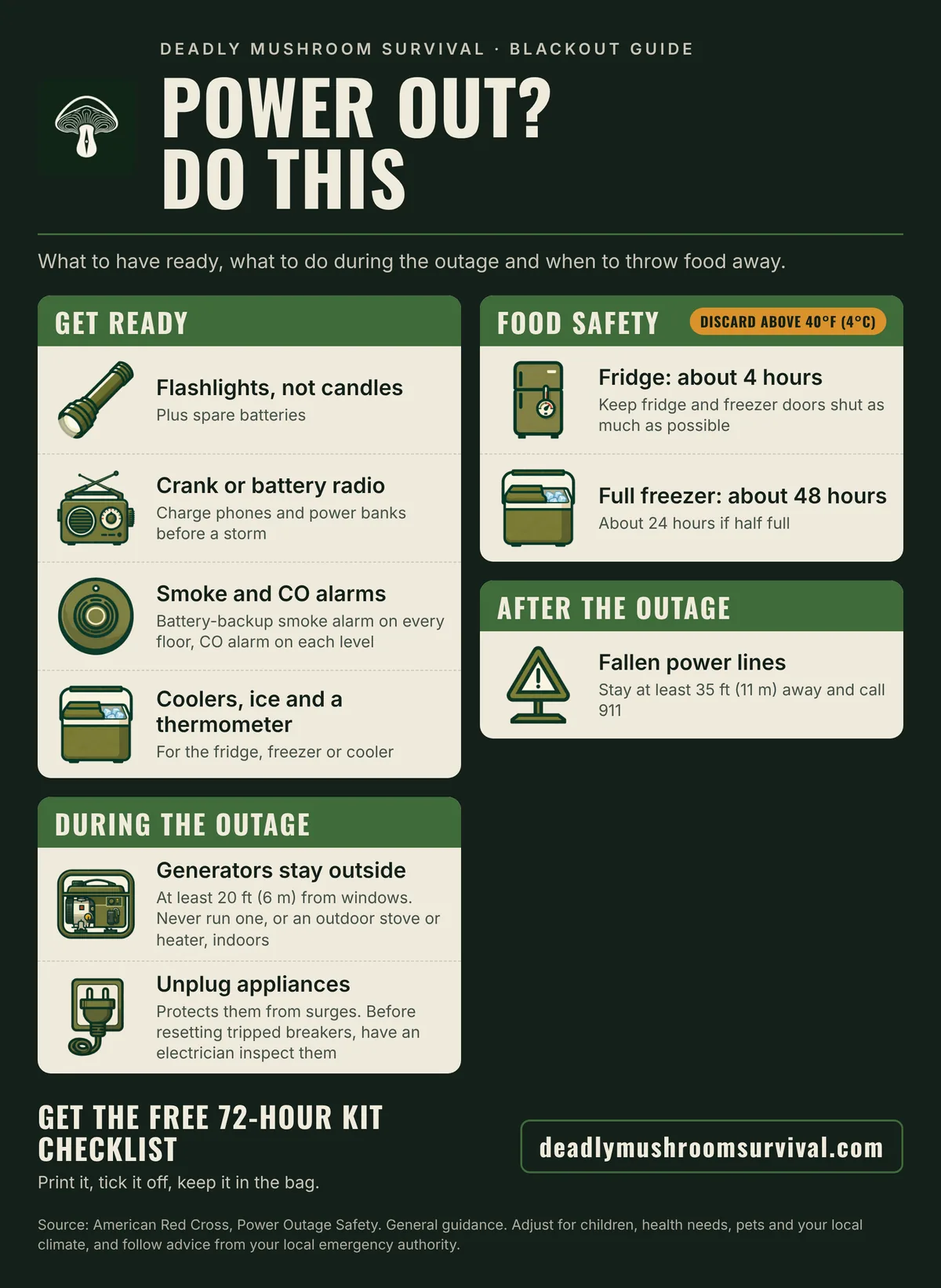
Key points (text version)
Get ready
- Use flashlights, not candles, and keep spare batteries.
- Keep a battery-powered or hand-crank radio. Ready.gov also suggests a NOAA Weather Radio with tone alert.
- Install battery-backup smoke alarms on every floor, inside and outside sleeping areas, and test them monthly.
- Have at least one carbon monoxide detector on each level of your home.
- Keep coolers and ice for food, and a thermometer in the fridge, freezer or cooler.
- Our tip: charge phones and power banks before a storm if you can.
During the outage
- Unplug appliances and electronics to avoid overloads and damage from power surges.
- Use generators, camp stoves and charcoal grills outdoors only, at least 20 feet (6 m) away from windows. Never use a generator indoors.
- Stay at least 35 feet (11 m) away from fallen power lines and anything they are touching, and call 911.
Food safety
- An unopened refrigerator keeps food cold for about 4 hours.
- A full freezer keeps its temperature for about 48 hours (24 hours if it is half full) if the door stays closed.
- Keep the fridge and freezer doors closed as much as possible.
- Throw out food that has been warmer than 40°F (4°C).
Sources
General information only. Adjust for your health, family, pets and local conditions, and follow advice from your local emergency authority.
More guides
- The 72-hour survival bagWhat to pack: water, food, light, first aid and documents.
- Make water safe to drinkBoil, disinfect or filter: the CDC steps for emergency water.
- Build a first aid kitThe Red Cross list for a family of four, with quantities.
- Car emergency kitWhat Ready.gov suggests keeping in your vehicle.